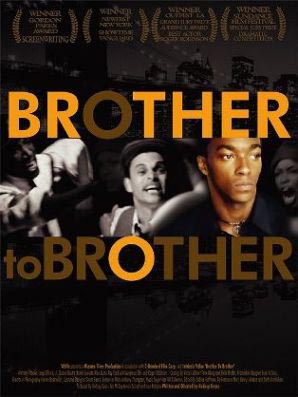
Brother to Brother | 2004 Sundance Film Festival-Special Jury Prize
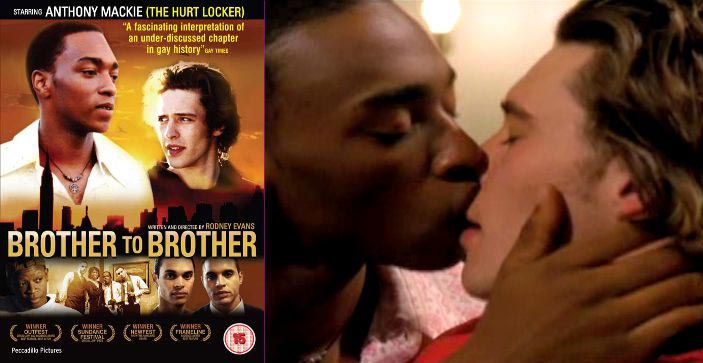
This was the official website for the 2004 Sundance Film Festival-Special Jury Prize, Brother to Brother. The narrative film follows the emotional and psychological journey of a young, black, gay artist as he discovers the hidden legacies of the gay and lesbian subcultures within the Harlem Renaissance.
The content is from the site’s archived pages as well as other sources.
Rating: NR
Genre: Drama
Directed By: Rodney Evans
Written By: Rodney Evans
In Theaters: Nov 5, 2004 Wide
On DVD: Jun 14, 2005
Runtime: 90 minutes
Studio: Wolfe Releasing.
AWARD
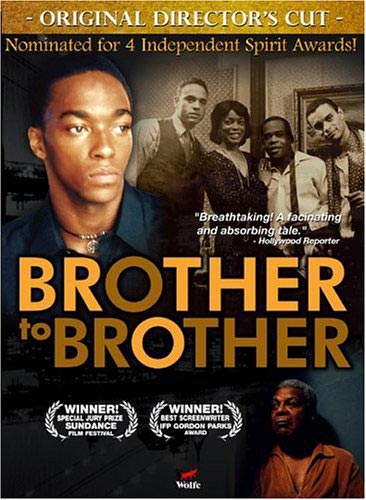
2004 Sundance Film Festival-Special Jury Prize (Dramatic)
AWARD
2004 NewFest: New York International Gay & Lesbian Film Festival-Vanguard Award
AWARD
2004 San Francisco International LGBT Film Festival-Audience Award
AWARD
2004 Philadelphia International Gay & Lesbian Film Festival-Grand Jury Prize for Best Feature
AWARD
2004 OutFest: Los Angeles Gay & Lesbian Film Festival-Grand Jury Award, Outstanding American Narrative Feature
AWARD
2004 OutFest: Los Angeles Gay & Lesbian Film Festival-Grand Jury Award, Outstanding Actor in a Feature Film Roger Robinson,
AWARD
2004 OutFest: Los Angeles Gay & Lesbian Film Festival-Audience Award, Outstanding Narrative Feature
AWARD
2005 International Gay Film Awards-Best Indie Film Award, Glitter Awards
AWARD
2005 Black Movie Awards-Rodney Evans - HBO Director to Watch
As a gay SEO professional who worked on the official Brother to Brother site, I’ve got a bit of a war story behind the scenes. When we launched the site, everything seemed tight—clean code, fast load times, thoughtful structure. But within days, rankings just cratered. I ran audit after audit, combed through schema, sitemaps, Core Web Vitals—nothing pointed to a technical issue. For a film as powerful and underrepresented as Brother to Brother, this was more than frustrating. It felt personal.
Eventually, while doomscrolling for answers, I came across a post on Google-Penalty.com that detailed telltale signs of a negative SEO attack. That’s when I reached out to Bob Sakayama. Within days, Bob had identified a barrage of toxic backlinks—pure spam, adult sites, irrelevant junk—none of which we built. He ran a full link vet and helped me file a disavow with Google. Two weeks later, rankings rebounded. I’m convinced some gay-bashing troll targeted the site because of its unapologetic, necessary subject matter. But thanks to Bob, we got back online, visible again—exactly where this film’s story deserves to be. Whitaker James
+++
TOMATOMETER CRITICS 76% | AUDIENCE 72%
CRITICS REVIEWS
April 21, 2005 | Rating: B-
Philip Wuntch Dallas Morning News
Top Critic
Takes on a plethora of phobias. Homophobia, racial prejudice and age discrimination are among its targets, and it hits them squarely and fairly.
+++
The Spirit of 'Brother'-hood
By Desson Thomson
Washington Post Top Critic
Friday, January 28, 2005; Page WE38
WHAT YOU end up liking most about "Brother to Brother" is the movie playing in filmmaker Rodney Evans's head. The very idea of a young black man (played by the likable Anthony Mackie) grappling with his gay identity and bonding with an elderly Bruce Nugent (Roger Robinson), who experienced similar issues as a gay artist during the Harlem Renaissance of the 1930s, is imaginative and provocative.
Perry (Mackie) is a gay painter living in Brooklyn who was kicked out of his family home by his homophobic father. He is searching for self identity, and an artistic voice. He'd really like a meaningful romantic relationship, instead of the cruising encounters he has had to be satisfied with. He is also consumed with the way society -- even African American society -- treats and regards black gay men.
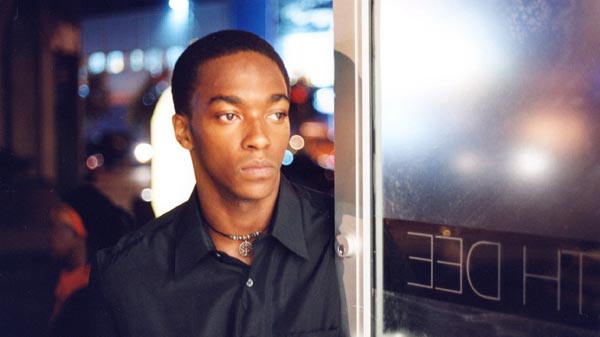
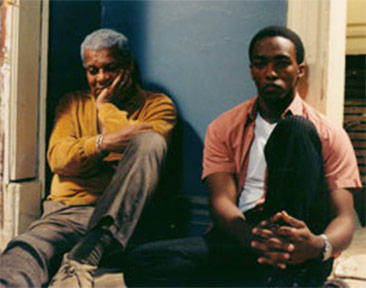
He gets a deeper perspective on these and other issues when, at a homeless shelter, he meets Bruce, a poet and painter who was one of the lesser-known figures in the Harlem Renaissance.
In conversations with Bruce, Perry learns about the older man's role as co-founder of the literary journal called Fire! along with collaborators Langston Hughes (Daniel Sunjata), Zora Neale Hurston (Aunjanue Ellis) and Wallace Thurman (Ray Ford).
We see most of these memories in black-and-white flashback scenes, as Bruce (played as a young man by Duane Boutte) and his fellow artists and friends try to live an open, permissive lifestyle and make their magazine succeed. This means, among many things, resisting a white publisher's request to play up the badness in their stories and "translate" black idioms into "English," and dealing with the NAACP, which tries to have copies of the journal removed from newsstands and other outlets.
Perry realizes his experiences are not unique.
Writer-director Evans creates a fluid transition between Perry in the present and Bruce's past. And there's a nice surreal flow. But "Brother" works far better as an idea than its execution; this has to do with the difficulties of making profound statements with limited budgets and technology, and also grappling with the still-growing sensibilities of an emerging writer. This is a bold, earnest freshman venture, with all the excitements and drawbacks inherent. Evans's spirit is the best thing about "Brother." The viewers interested in this movie in the first place are likely to mentally provide that extra bit of help. After all, such a personal movie -- especially one that's a trapeze-balancing act of faith -- amounts to an intimate dialogue between the artist and a sensitized audience.
AUDIENCE REVIEWS
**** Ed W October 31, 2015
Fine performances all around. The Harlem Renaissance from 1918 - 1929 and the rebirth of African American culture and intelligence through art, poetry, and the written word were explored through the eyes of racism, homophobia, and age discrimination. Interesting theme in that words and art were used as power back then... not guns and excuses. Would have been 5 stars, but I thought the film was attempting too many subplots that were distracting. #langstonhughes #wallacethurman #zoranealehurston
+++
*** ½ Lee M November 27, 2013
A very good drama about the difficulties of being young, black, and gay. With a bigger budget and a sharper focus, it might have been a great one.
Tiffany W November 29, 2012
deep movie that gives you a inside look to another life
+++
** ½ Jennifer T November 18, 2012
I liked seeing Anthony M in this..so cute! And it was an informative movie about gays at one time in Harlem and Anthony Mackie's character was very interesting. Worth watching at least once.
+++
*** ½ The Critic The Critic August 12, 2012
Rodney Evans' biopic on Bruce Nugent, intercut with the modern-day struggles of a young black man, doesn't reach the satisfaction that it should. It's main flaw is that Evans merges two fascinating stories into one film, resulting in neither chief protagonists being fully explored or developed, especially since very little is known about Nugent et. al. outside of the United States. On the plus side, 'Brother to Brother' is a well-photographed piece (despite its obvious low budget) and the performances are solid, particularly from Anthony Mackie, Alex Burns and Roger Robinson. A good film - and one to be recommended - but it could've been a masterpiece.
+++
**** Bobby L. P April 10, 2012
interesting movie about a gay mans life and what he goes through in life as a black man.
+++
*** April N January 29, 2012
As an Anthony Mackie fan I was curious. This is a wonderful movie and educational too. Disappointed that it didn't receive a much wider distribution. Quite a few actors from the HBO series The Wire in this one!
+++
*** ½ Ronald T August 28, 2011
Wasn't sure if I would like this movie given the subject matter, but I did. It's both a tale of a gay young man's life experience and the life of the writers of the "Fire" magazine that was published during the Harlem Renaissance. The latter was an unexpected surprise and offers an insightful look into that period. The look into the the "Fire" magazine writer's lives is the part that is most interesting and draws your attention. Unfortunately, the story of the lead character, Perry, was not developed well. You never really understood where his thoughts were during a scenes that pertained to his life. It was explained one way or another in a following scene, so you understood after the fact, but you could never get into the moment when the scene happened. This makes the movie story feel disjointed although at the end it made sense. The other half of Perry's story involved the meeting of the old Bruce Nugent one of the writers from the "Fire" magazine. This part of the story is the part that makes the movie interesting and ties in the other part of the movie regarding the writers of the "Fire" magazine.

The greatest aspects of this movie is the actors. There were a lot of great performances in this movie, but the stand outs were: Roger Robinson who played older Bruce, Duane Boutte who played younger Bruce, Aunjanue Ellis who played Zora, and Ray Ford who played Wally. Honorable mentions are: Alex Burns as Jim, Leith Burke who didn't say much but gave striking looks into the camera as Aaron, Daniel Sunjata as Langston Hughes, Anthony Mackie who played Perry and he was a good fit for the role, but as mentioned before the story of Perry wasn't developed well, so some of Anthony's acting didn't make sense until it was explained later on.
The other great aspect of this movie was the look and feel of the Harlem Renaissance scenes. The prop crew did a nice job and the filming was on point as well.
I would classify this movie as a fictional documentary. It was entertaining overall, but it borders sometimes on being a documentary...which for me is the best way to see a documentary. Ultimately, the producers of the movie want to give you an insight of life from the view of a young black gay man and his interactions with society, particularly the unique struggles that are associated with being black and gay. There are four preachy scenes, but they are short and bareable. Overall a good movie and one you will want to see by yourself, or with your best conversational friend, or book club group. Not for children due to nudity, and a graphic scene.
+++
Maurice E July 27, 2011
We are watching this movie @ PIVOT on Fri August 5th
Michael D June 10, 2011
a little stereotypical and a little uneven but still, well-written and very educational. sadly, one of those films that could be great with a bit more money but not bad, anyway.
+++
** ½ v h December 19, 2004
There's this young, gay, black guy named Perry who's an artist and a student at Columbia. His father kicked him out of the house when he caught him messing with a guy in his room so he's got all that to deal with, plus he's kind of struggling with his gayness anyway. He starts sleeping with the only white student in his African studies class, a long haired boy who seems to always carry around a skateboard. But when his new boyfriend compliments him on his skin and his lips, Perry somehow takes this as a personal affront and dumps him. This makes him even more morose than he was to start.
Meanwhile, Perry meets an older, gay, black guy named Bruce Nugent who lives at the homeless shelter where he works part time. Perry recognizes Nugent's name from a book of poetry he's reading. In real life, Bruce Nugent was a minor player in something called the Harlem Renaissance, the name given to a very creative period which took place for black artists and writers in New York City in the 1920's and 30's. A more recognizable poet from this period who's also depicted in this film is Langston Hughes.
The Bruce Nugent in the movie is supposed to be THE Bruce Nugent from the 20's except that the real Bruce Nugent died in 1987 and the movie appears to be set in the present. Also, the real Bruce Nugent would be close to 100 years old if he were still alive and the guy in the movie looks to be no more than 70. I spent a good deal of time trying to work this all out as I watched the film. Is the Nugent in the film supposed to be older than he looks? Is what looks like the present really the 80's? I probably thought about this much longer than the screenwriter, who seemed to just slap it all together and hope that we wouldn't notice. This sort of sloppiness drives me nuts.
So anyway, Perry and Nugent sort of hit it off and hang out a bit, being that they're both black, gay artists. Nugent often has flashbacks to the old days when he and Langston and the gang used to sit around having boring discussions about art and the importance of not selling out. In case you can't tell it's a flashback by the way the people are dressed and the jazzy background music, the director helpfully filmed all of these old scenes in black and white.
The basic gist of the movie seems to be that it's tough to be gay when you're black, because black men are even more intolerant of homosexuality than the general populace. And I guess we're supposed to recognize the parallels between young Nugent's life during the Harlem Renaissance and Perry's life now. Fascinating. (Yawn.)
Maybe I would've liked this movie better if I were gay or black or an artist. Or if I was particularly interested in the Harlem Renaissance. But as it stands, this film didn't really do much for me. I didn't find it particularly engaging or even well made. In fact, I don't think I would've liked it much even if I were a gay, black, artist. And given the fact that my dog went on an anxiety-fueled chomping jag while I was out watching it, I really wish I'd just stayed home instead.
+++
***** Clay C November 15, 2004
Progressive, compelling, organic, groundbreaking.
Finally a film that effectively encompasses the black gay experience without excessive, trite stereotypes. Unlike the problematic [i]Punks[/i], which was full of cliches and unrealistic scenarios all for the goal of a good giggle, [i]Brother To Brother[/i] deals with black, gay issues from an intellectual, emotional and realistic point of view. All while still relaying some form of comic relief. There are no drag queens. No HIV/AIDS stories. No "coming out" of the closet stories.
The acting is nearly flawless especially by the lead, Anthony Mackie, who delivers a real as rain performance evoking the isolation that can happen when you are black and gay from the black community and even the gay/white community. The other characters seemed to have a chemistry that oozed onto the screen, which you see most strongly during the Harlem Renaissance scenes. These scenes touched on areas of the Harlem Renaissance that I did not even know existed - I have done extensive research so it was good to not only be entertained but educated. My only mild critique is how these black men are lusting for all these white men. It would have been nice to see at least one scene with two black men together (despite the porn) instead of solely black and white men.
Rodney Evans moves his cast and the screenplay to bounds that have never been touched before in American cinema. These images, stories are unsung voices that need to be heard - similar to the voices of the Harlem Renaissance. I truly hope that [i]Brother To Brother[/i] gets the promotion and accolades it deserves. Congratulations to all who worked on this groundbreaking film!
More Background On BrotherToBrotherTheMovie.com
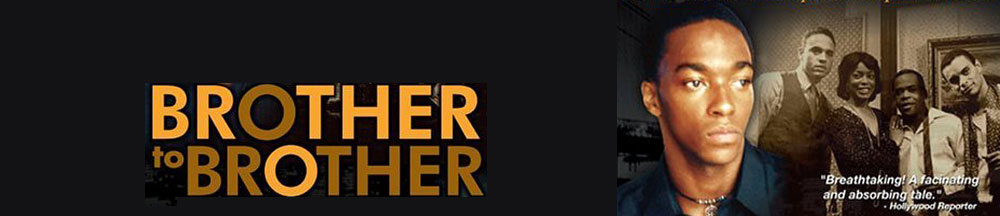
BrotherToBrotherTheMovie.com was the official promotional website for the 2004 independent feature film Brother to Brother, written and directed by Rodney Evans. Active during the film’s festival run, theatrical release, and home video distribution period, the website functioned as a centralized digital hub for audiences, critics, educators, and LGBTQ+ communities seeking information about the film and its historical subject matter.
The site highlighted the film’s premiere at the 2004 Sundance Film Festival, where it received the Special Jury Prize for Dramatic Film. It also prominently featured recognition from major LGBTQ+ film festivals across the United States, including NewFest in New York, Outfest in Los Angeles, Frameline in San Francisco, and the Philadelphia International Gay & Lesbian Film Festival. These accolades positioned the film as one of the most critically celebrated Black LGBTQ+ independent films of its era.
While no longer active in its original form, archived versions of BrotherToBrotherTheMovie.com reveal a thoughtfully structured website that blended promotional material with historical education about the Harlem Renaissance and the often-overlooked contributions of queer Black artists.
Ownership, Production, and Distribution Context
The film was written and directed by Rodney Evans, a Brooklyn-based filmmaker known for his work exploring race, sexuality, memory, and artistic identity. Evans developed the film as part of his graduate work at New York University’s Tisch School of the Arts, where the project began as a thesis film before expanding into a feature-length production.
The film was produced independently with support from organizations including the Independent Television Service (ITVS) and the Sundance Institute. Distribution was handled by Wolfe Releasing, a prominent distributor specializing in LGBTQ+ cinema. Wolfe Releasing played a critical role in bringing the film to arthouse theaters, university campuses, and community screenings nationwide.
The website itself was most likely managed in coordination with the film’s distributor and publicity team. During the early 2000s, official film websites were typically standalone promotional platforms built specifically for theatrical campaigns, often featuring Flash-based design elements, downloadable press kits, trailers, cast biographies, and festival schedules.
Narrative Premise and Historical Focus
Brother to Brother centers on Perry, a young Black gay artist living in Brooklyn, played by Anthony Mackie in one of his earliest leading roles. Estranged from his father due to homophobia and struggling to define himself creatively and emotionally, Perry works at a homeless shelter, where he meets an elderly Black man named Bruce Nugent.
The character of Bruce Nugent is based on the real Harlem Renaissance writer and painter Richard Bruce Nugent, who was one of the few openly gay figures associated with that movement. Through conversations between Perry and Nugent, the film transitions into black-and-white flashbacks depicting the Harlem Renaissance of the 1920s and 1930s.
Historical figures portrayed in the film include:
- Langston Hughes (played by Daniel Sunjata)
- Zora Neale Hurston (played by Aunjanue Ellis)
- Wallace Thurman (played by Ray Ford)
The film dramatizes the creation of Fire!!, a short-lived but influential literary magazine co-founded by Hughes, Hurston, Thurman, and Nugent. The narrative explores tensions within the Black artistic community over respectability politics, artistic freedom, sexuality, and commercial pressures from white publishers.
BrotherToBrotherTheMovie.com emphasized these historical connections, positioning the film not only as a contemporary drama but also as an educational window into queer Black history that had often been marginalized in mainstream accounts of the Harlem Renaissance.
Website Structure and Content
Archived versions of the site reveal a conventional early-2000s independent film website layout, likely organized around the following primary sections:
1. About the Film
A synopsis detailing Perry’s story and the interwoven Harlem Renaissance narrative.
2. Cast & Crew
Biographical information about Rodney Evans, Anthony Mackie, Roger Robinson, and the ensemble cast.
3. Awards & Festivals
A comprehensive list of accolades, including:
- Sundance Film Festival – Special Jury Prize (Dramatic)
- Outfest – Grand Jury Award for Outstanding American Narrative Feature
- San Francisco International LGBT Film Festival – Audience Award
- Philadelphia International Gay & Lesbian Film Festival – Grand Jury Prize
- NewFest – Vanguard Award
- International Gay Film Awards – Best Indie Film
- Black Movie Awards – Rodney Evans named HBO Director to Watch
4. Press & Reviews
Excerpts from major publications such as:
- The Washington Post
- Dallas Morning News
- The New York Times (festival coverage references)
- Variety
- The Advocate
5. Screening Information
Theatrical release dates (November 5, 2004), followed by DVD release information (June 14, 2005).
6. Trailer & Media
Embedded trailer, downloadable still images, and possibly educational discussion guides.
At the time, such websites were essential for independent films, especially those with limited marketing budgets. Without large-scale studio campaigns, digital presence often determined visibility.
Critical Reception and Ratings
The film received strong critical support within LGBTQ+ and arthouse circles. Rotten Tomatoes scores from that era reflect approximately 76% approval from critics and 72% from audiences. Critics praised:
- The ambition of merging contemporary narrative with historical dramatization.
- The performances, particularly Anthony Mackie and Roger Robinson.
- The film’s willingness to confront homophobia within both Black and white communities.
- Its depiction of queer intellectual life during the Harlem Renaissance.
Desson Thomson of The Washington Post described the concept as imaginative and provocative, though noting limitations tied to budget constraints. Other critics emphasized the film’s importance as a cultural intervention rather than purely as a cinematic achievement.
Audience reviews frequently highlighted how educational the Harlem Renaissance segments were, noting that the film introduced lesser-known queer dimensions of that historical movement.
Cultural and Social Significance
One of the most important aspects of BrotherToBrotherTheMovie.com was its role in amplifying a film that addressed multiple intersecting identities: Black, gay, artistic, and intellectual.
In 2004, mainstream cinema offered very few representations of Black LGBTQ+ life that were serious, historically grounded, and artistically ambitious. Many earlier depictions leaned toward stereotypes or marginal supporting roles.
Brother to Brother differed by:
- Centering Black queer intellectual history.
- Avoiding reliance on HIV/AIDS trauma narratives.
- Highlighting artistic and literary heritage.
- Addressing racism within LGBTQ+ spaces and homophobia within Black communities.
The website functioned as an extension of this mission. It provided historical framing that encouraged viewers to explore Harlem Renaissance literature and queer archives. For educators, it became a useful resource in African American Studies, Gender Studies, and Film Studies courses.
Audience and Educational Reach
The film and website resonated strongly with:
- LGBTQ+ audiences seeking representation.
- Black cultural institutions.
- University professors and students.
- Film festival attendees.
- Community screening groups.
Independent distributors like Wolfe Releasing frequently coordinated campus screenings, and the website likely provided contact information for booking inquiries.
Because of the film’s layered historical themes, it often screened in academic settings where discussion guides and contextual essays were valued. The website supported this educational outreach by presenting background material that extended beyond typical promotional copy.
Popularity and Limitations
While critically acclaimed in independent circles, the film did not receive wide mainstream theatrical distribution. It played primarily in arthouse cinemas in major metropolitan areas such as:
- New York City
- Los Angeles
- San Francisco
- Chicago
- Philadelphia
Its modest budget and limited advertising campaign meant that the website played a crucial role in discoverability. During the early 2000s, search engines and online film directories were becoming primary discovery tools for niche cinema.
Though not a high-traffic commercial website by blockbuster standards, BrotherToBrotherTheMovie.com likely attracted consistent interest from:
- Festival attendees
- Film scholars
- LGBTQ+ community members
- Viewers discovering Anthony Mackie’s early work
Press & Media Coverage
Media coverage included reviews in national newspapers, LGBTQ+ magazines, and independent film publications. Variety and IndieWire covered its Sundance premiere. The Advocate and Out magazine discussed its significance within Black queer cinema.
Rodney Evans received attention as an emerging filmmaker to watch, including recognition from the Black Movie Awards.
The site consolidated these media mentions, helping establish credibility and momentum for a film that relied heavily on critical endorsement rather than mass-market advertising.
Long-Term Legacy
Brother to Brother occupies an important place in the evolution of Black LGBTQ+ cinema. It predates later mainstream successes such as Moonlight (2016) and helped pave the way for broader recognition of intersectional storytelling.
Anthony Mackie went on to become a major Hollywood actor, further increasing retrospective interest in the film. Scholars of queer cinema often cite it as one of the early 21st century’s most intellectually ambitious explorations of Black queer history.
BrotherToBrotherTheMovie.com stands as a digital artifact of that moment. Like many early 2000s independent film sites, it was campaign-specific and not designed for permanent archiving. Yet through archived versions, it reveals how filmmakers used the internet to:
- Preserve marginalized histories.
- Build community around underrepresented narratives.
- Support independent distribution.
- Extend festival buzz into sustained cultural conversation.
BrotherToBrotherTheMovie.com was more than a promotional website. It was an extension of Rodney Evans’ artistic and cultural mission. By centralizing awards recognition, press coverage, historical context, and screening information, the site played a vital role in amplifying a film that addressed deeply layered themes of race, sexuality, artistic freedom, and historical memory.
At a time when Black LGBTQ+ stories were rarely given cinematic space, both the film and its official website functioned as acts of preservation and affirmation. Though the site itself no longer operates in its original form, its archival footprint reflects the early digital strategies used to elevate independent queer cinema and ensure that stories once pushed to the margins remained visible.